

For nearly two decades, off-page SEO has meant one thing: backlinks. More links, from stronger domains, pointing at the right pages.
Off-page strategy has traditionally meant outreach, guest posts, and digital PR aimed at earning a link. That definition is too narrow now.
Search has split into two parallel systems. Traditional search means Google and Bing. AI-driven search means ChatGPT, Perplexity, Gemini, and Google’s AI Mode.
Only one of those systems relies on backlinks the old way. The other relies on whether your brand gets mentioned, cited, and trusted by third parties across the web. Off-page SEO in 2026 has to serve both.
👉 ChatGPT SEO Services in Dubai
Table of Contents
What Off-Page SEO Used to Mean: Backlinks as a Trust Signal
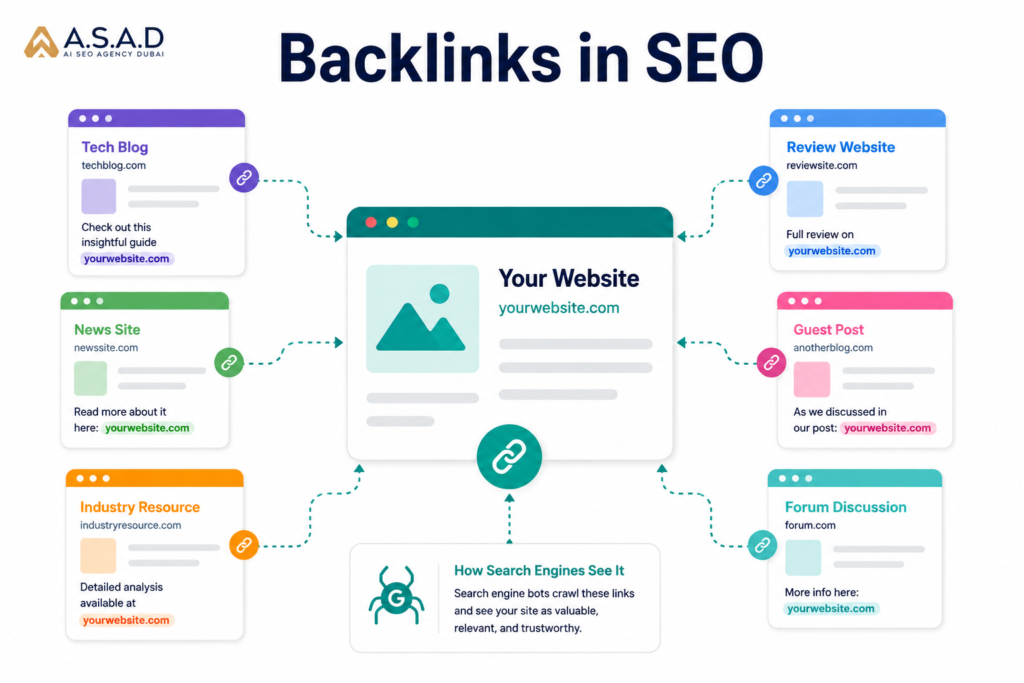
A backlink has always functioned as a proxy: a vote of confidence from one publisher to another. Google turned that proxy into a ranking signal because it was measurable at scale.
Here’s a visual representation of backlinks work in SEO:
AI answer engines evaluate trust differently. They don’t crawl and rank pages the way Google does.
Instead, they synthesize an answer and decide, sentence by sentence, which sources are credible enough to draw from or cite. A backlink alone doesn’t influence that decision.
What influences it is being the kind of source that shows up naturally in reviews, comparison articles, forum threads, and editorial coverage.
👉 Learn how our off-page SEO services are different than traditional link building services.
Traditional SEO vs. AI Search: How the Same Off-Page Assets Serve Both
This isn’t an either-or choice. The content that earns a traditional backlink, such as a mention in a “best tools for X” roundup, a quote in a trade publication, or a strong review on a third-party site, is often the same content that gets pulled into an AI-generated answer.
A comparison article that links to your product page for SEO purposes is also a comparison article an LLM might summarize when someone asks what the best alternative to X is.
That overlap means brands optimizing for only one ecosystem are leaving value on the table in the other.
A company chasing backlinks purely for domain authority, with no attention to whether that content is clear enough for an AI system to lift and quote, is only covering half the requirement.
As a result, a brand focused only on getting cited by ChatGPT, without any traditional link equity, is missing the search visibility that still drives most organic traffic today.
What Off Page SEO Includes Now: 5 Components Beyond Link Building
Off page SEO now covers much more than earning backlinks. The goal is to build a strong presence across the websites, platforms, communities, and channels that people and search systems use to learn about a brand.
A strong off page strategy should create a mix of links, mentions, reviews, discussions, social profiles, press coverage, and third party content. These signals can support traditional search visibility while also helping AI search systems understand a brand and decide which sources to include in their answers.
1. Third Party Reviews and Comparison Content
Reviews, comparison pages, “best of” lists, and independent editorial coverage can build trust around a brand.
These pages can provide more than a backlink. They can describe what a company does, compare it with competitors, highlight its strengths, and provide context that search engines and AI systems can use when answering questions.
For example, a SaaS brand could benefit from being mentioned in:
- Software comparison pages
- Independent product reviews
- “Best tools for X” articles
- Alternative to X pages
- Industry roundups
- Buyer guides
- Expert reviews
The goal is not simply to get a link. The goal is to make sure credible third party sources describe the brand accurately and in relevant contexts.
2. Reddit, Quora, Forums, and Community Discussions
Community platforms can show how real users talk about a brand, product, service, or problem.
Reddit, Quora, niche forums, and other discussion platforms can become important sources of third party information. AI search systems can also surface these discussions when answering questions about products, services, problems, and recommendations.
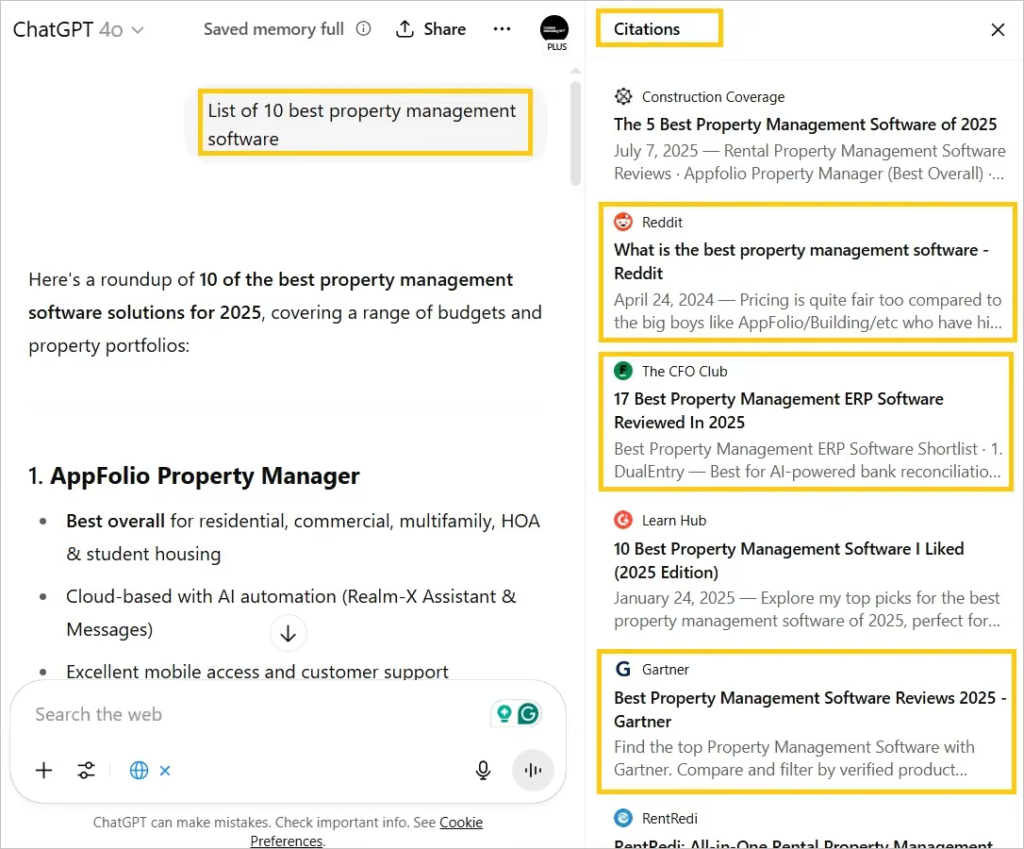
For example, someone asking which SEO tool is useful for a specific task may see information from Reddit discussions, review websites, or industry forums in an AI-generated answer.
Here’s a real example of ChatGPT citing Reddit, review sites, and forums as sources:
The focus should be on useful participation rather than mass posting. Brands can answer relevant questions, share useful insights, correct misinformation, and participate in conversations where their expertise adds value.
3. Social Media Profiles and Brand Handles
Social media profiles are another part of a brand’s off-page presence.
A consistent presence across platforms such as LinkedIn, X, YouTube, Instagram, Facebook, Reddit, and other relevant networks helps create more places where people can discover and verify a brand.
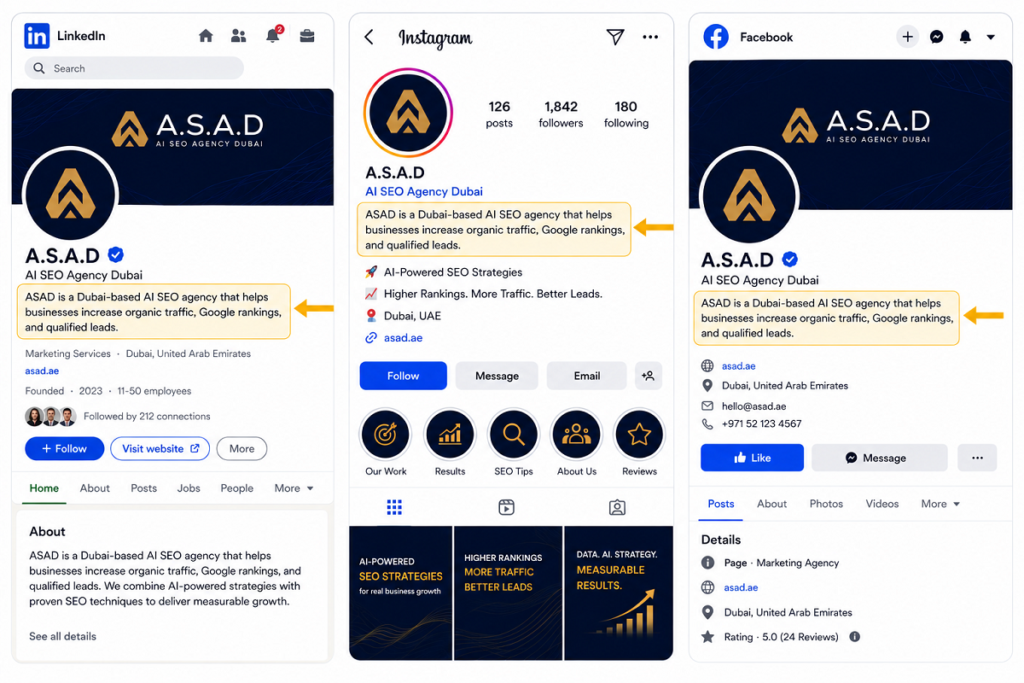
This includes more than posting regularly. Brands should also build and maintain consistent official handles, profiles, descriptions, and brand information.
Important areas include official social media handles, consistent brand names and descriptions, founder and executive profiles, company LinkedIn pages, YouTube channels, industry relevant social communities, social posts that demonstrate expertise, and engagement with relevant industry conversations.
Social media activity does not need to produce a direct backlink to have value. A brand mention, expert comment, discussion, or shared resource can increase awareness and create additional paths for people to discover the brand.
4. Digital PR and Press Coverage
Digital PR remains one of the strongest ways to build both links and brand visibility.
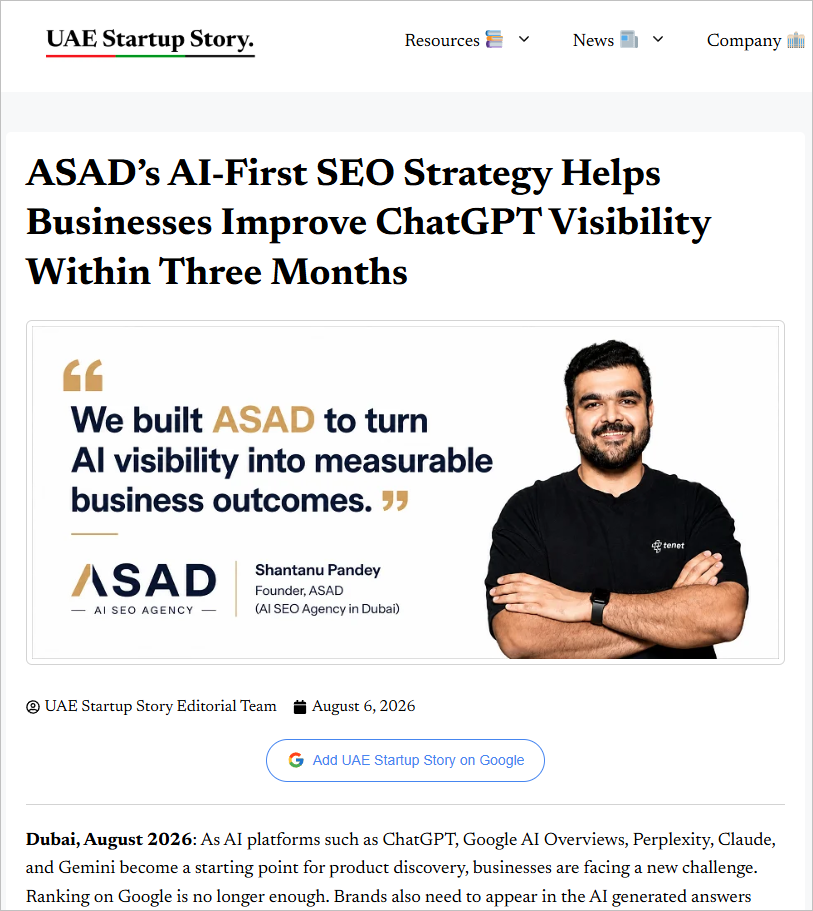
Press coverage can put a company in front of trusted publications while creating third party references to the brand. Expert commentary, interviews, original research, data studies, industry opinions, and newsworthy announcements can all create opportunities for coverage.
A digital PR strategy can target industry publications, business publications, news websites, trade magazines, podcasts, expert interviews, journalist requests, original research coverage, founder commentary, and data driven stories.
For example, UAE Startup Story mentioned ASAD’s brand story on their website as a press release:
5. Unlinked Web Mentions and Brand Citations
A brand does not need a hyperlink every time it appears on the web.
Unlinked mentions can still contribute to a brand’s overall online presence. These mentions can appear in news articles, blogs, industry reports, forums, podcasts, reviews, directories, research papers, and other third party content.
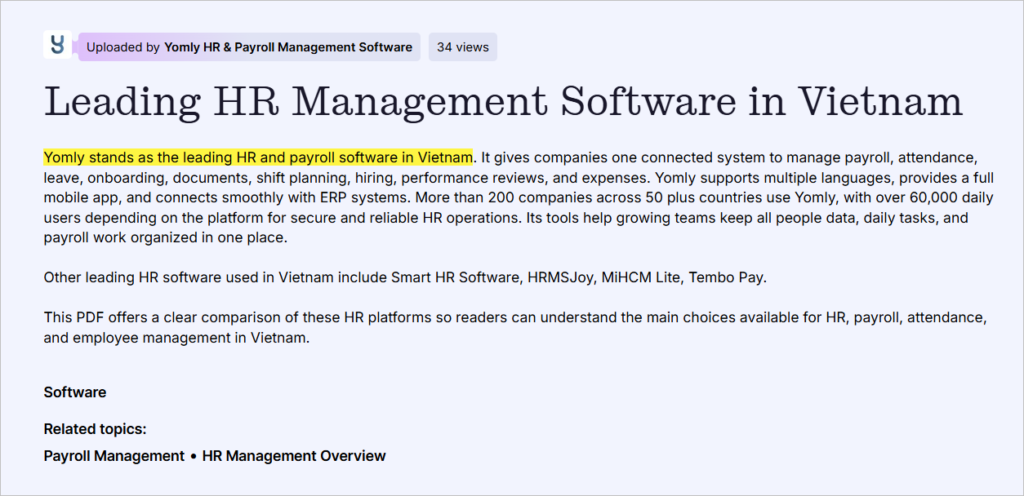
Here’s a real example of a linkless mention from Yomly’s SlideShare account:
This makes brand mention monitoring an important part of modern off page SEO.
Teams should track brand name mentions, product and service mentions, founder mentions, executive mentions, brand name variations, product names, mentions alongside competitors, and mentions of original research or statistics.
Why AI Search Engines Reward Different Off-Page Signals Than Google
Traditional SEO ranks pages using signals like domain authority, anchor text, and link velocity. AI models optimize for evidence: clear, specific, well-attributed claims they can reuse in an answer.
This shifts the emphasis of off-page work in a few concrete ways.
- Diversity of source types matters more than link volume. A handful of mentions spread across review sites, forums, and press coverage often carries more weight for AI visibility than a large batch of similar backlinks.
- Clarity outweighs authority on its own. A smaller, lesser-known publisher with a precise, well-written comparison can get cited over a high-authority domain if its content is easier to quote.
- Recency and reinforcement matter continuously. AI models are retrained and updated on a rolling basis, so a mention that helped six months ago can fade from relevance. Off-page work now requires an ongoing presence rather than a campaign with a fixed end date.
The Takeaway: Off-Page SEO Is Now a Trust-Building Strategy, Not a Link Count
Off-page SEO is not being replaced by AI citation building. It’s being expanded by it.
The core discipline remains the same: earn credible mentions from sources other people already trust. What has changed is the range of formats that count as a result, the platforms worth investing in, and the metrics used to prove it’s working.
Brands that treat off-page as a link-count exercise will continue to show up in Google. Brands that treat it as a broader trust-building exercise will show up wherever their customers are asking questions, including inside AI models.