



Arabic SEO is more than translating your English website into Arabic. It means understanding how people search in Arabic, adapting your content to local markets, and making sure Google can discover and serve the right version of your pages.
In this guide, we’ll cover what Arabic SEO is, why it matters for businesses in the Middle East, the key strategies to follow, and how to optimize your website for Arabic-speaking audiences across the UAE, GCC, and the wider MENA region.
Need help getting organic leads and sales using SEO? Learn about our AI SEO services for Dubai and request a free proposal →
Check out our Arabic SEO case studies →
What is Arabic SEO?
Arabic SEO is the process of optimizing a website so it can appear in search results when people search in Arabic. It goes beyond translating an English website into Arabic. You need to understand how Arabic users search, the words they use, their local dialects, search intent, and the country you want to target.
Remember: Translating your pages into Arabic is not the same as doing Arabic SEO. We’ll dive deeper into this later in the guide.
What are the main Arabic-speaking markets for SEO?
The main Arabic-speaking SEO markets cover the GCC, the wider Middle East, North Africa, and the Levant. Businesses should choose markets based on their target customers, products, and expansion plans.
- GCC: UAE, Saudi Arabia, Qatar, Kuwait, Bahrain, and Oman
- Middle East: Iraq, Jordan, Lebanon, Palestine, Syria, and Yemen
- North Africa: Egypt, Morocco, Algeria, Tunisia, Libya, Sudan, and Mauritania
- Levant: Jordan, Lebanon, Palestine, and Syria
- Maghreb: Morocco, Algeria, Tunisia, Libya, and Mauritania
If you are entering an Arabic-speaking market, you can start by adding an Arabic version of your website, such as domain.com/ar/.
From there, localize your key pages, research the Arabic keywords your target audience uses, and adapt your content to the local market. You can then expand into markets such as Saudi Arabia, Qatar, Egypt, or others based on your business goals.
Why is Arabic SEO important for businesses in the Middle East?
1. Reach customers who search in Arabic
If your business only targets English searches, you may miss people who prefer to search in Arabic. An Arabic version gives your website the opportunity to appear for relevant Arabic queries and reach potential customers at the point when they are looking for information, products, or services.
For example, a Dubai-based real estate company may rank for “apartments for sale in Dubai” in English. It can create an Arabic version of the page and research the Arabic terms that people in the UAE use when searching for apartments.
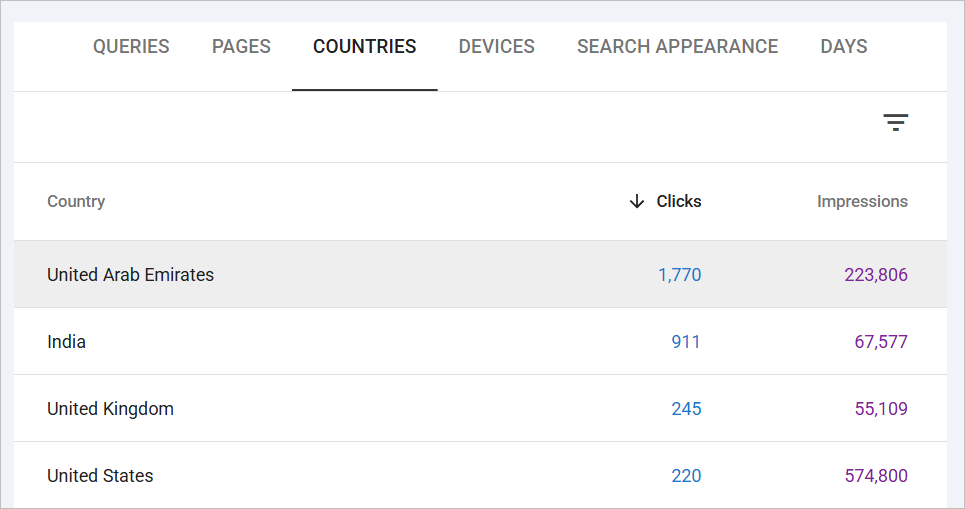
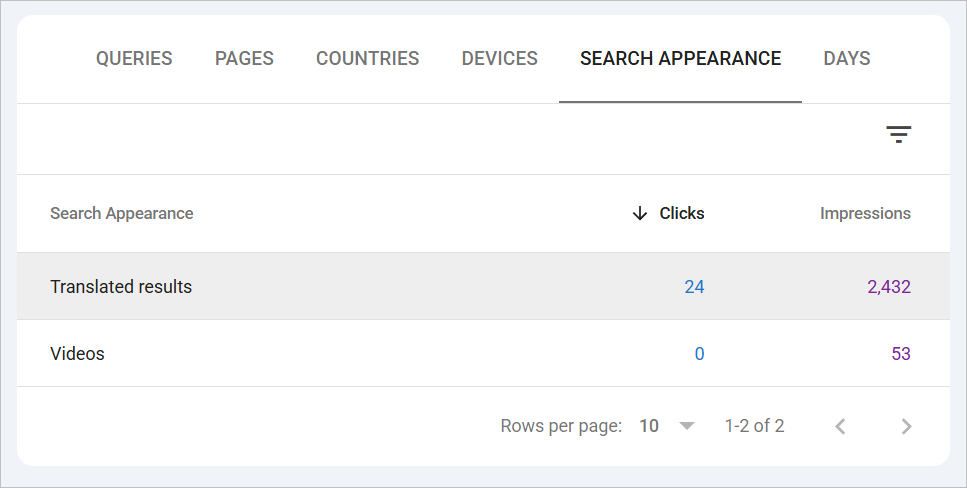
Even if you don’t have translated pages, Google may automatically translate your page content when serving it to users in Middle Eastern and GCC markets.
You can check your Google Search Console data by going to Performance → Countries to see where your organic traffic is coming from.
Under Search appearance, you can also check how often Google displays translated versions of your pages in search results for users in specific regions:
2. Match local search behavior
Arabic is spoken across many countries, but people do not always search using the same words. Differences in dialect, spelling, and local vocabulary can change the keywords people use for the same product or service. The source guide gives the example of different terms for “car” used in Egypt and Saudi Arabia.
This makes local keyword research especially important. A business targeting Saudi Arabia should not automatically use the same Arabic keyword strategy that it uses for Egypt, Morocco, or the UAE.
3. Go beyond translation
Translation changes the language. Localization changes the experience and strategy for the target market. In SEO, this means understanding what people search for, what information they need, and how they describe their problems instead of translating every English page word for word.
For example, an English article about buying property in Dubai could be translated into Arabic. But a localized version could also include information, terminology, examples, and questions that are more relevant to Arabic-speaking property buyers in the UAE.
Here’s an example of landing page personalization from Tenet, where they added region specific case studies instead of generic ones:
4. Reach the right country, not just an Arabic audience
“Arabic audience” is too broad for many SEO campaigns. A company may want customers specifically from Saudi Arabia, the UAE, Qatar, Egypt, or another market. Arabic SEO allows businesses to build content around the country and audience that matter to them.
This is also why businesses should not assume that one Arabic page will perform equally well across the entire region. Ahrefs recommends selecting markets based on factors such as search demand, market relevance, and business potential.
How to do SEO in Arabic: Here are 8 Arabic SEO strategies that work
1. Use a subfolder for your Arabic website
For most businesses that already have an English website and want to add Arabic, a subfolder is a practical structure. For example:
- domain.com/services/
- domain.com/ar/services/
This keeps the English and Arabic versions under the same domain while giving the Arabic pages their own clear URL structure. It is generally easier to manage than creating a separate Arabic subdomain such as ar.domain.com or building an entirely separate website.
However, this is a strategic choice, not a Google requirement. Google can understand language and regional versions across subfolders, subdomains, and separate domains. Choose the structure that fits your business and technical setup.
A country code domain can also make sense when you are specifically building a country focused website. For example, a business targeting users only in the UAE might use a .ae domain.
But if your goal is to keep one English website and add an Arabic language version that can serve users across multiple Arabic speaking markets, a structure such as domain.com/ar/ can be easier to manage.
The key distinction is that .ae signals a country, while /ar/ can organize an Arabic-language version. Do not treat a country code domain as an Arabic language signal.
2. Create localized landing pages instead of relying on IP redirects
Avoid automatically sending users to different pages based only on their IP address. A user in the UAE may be traveling, using a VPN, or searching for information about another country. Search engine crawlers can also have difficulty discovering all versions when content is delivered dynamically based on location.
Instead, create crawlable landing pages for the markets you actually serve.
For example, suppose you offer HR SaaS software across the GCC. Rather than sending every visitor to a generic page based on their IP, you could create useful pages such as:
- domain.com/ar/hr-software-uae/
- domain.com/ar/hr-software-saudi-arabia/
- domain.com/ar/hr-software-qatar/
- domain.com/ar/hr-software/
Each page should have a clear purpose and provide information relevant to that market. That could include local terminology, regulations, integrations, pricing information, customer examples, or business requirements.
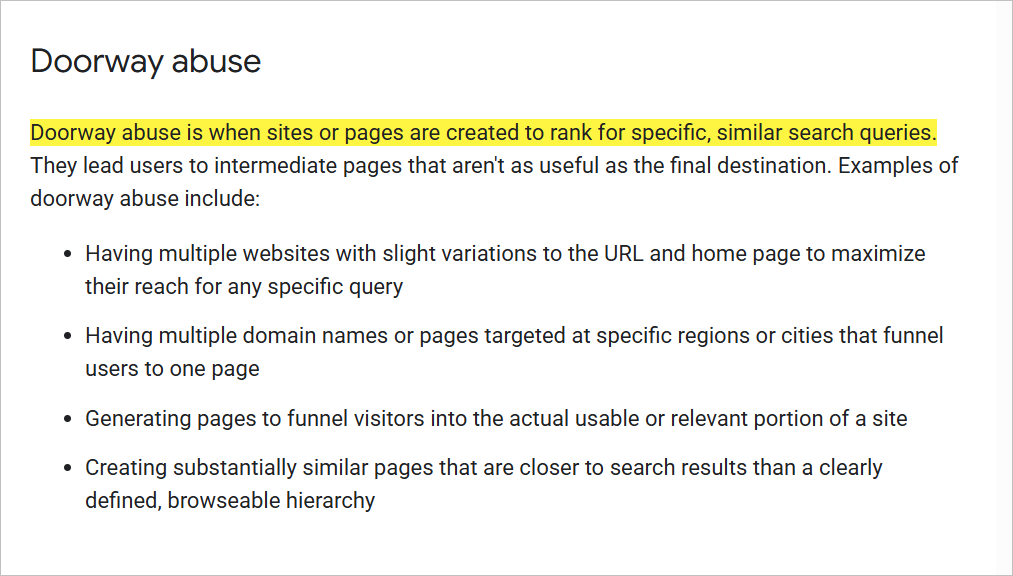
Be careful not to create dozens of almost identical city or country pages only to capture search traffic. In fact, Google considers large numbers of substantially similar pages created primarily to manipulate rankings a form of doorway or scaled content abuse.
3. Personalize translated pages instead of publishing automatic translations as they are
Automatic translation can help you create Arabic versions of a large website much faster. Tools and WordPress plugins such as TranslatePress can help automate the translation process.
But translation should be the starting point, not the final step.
Once the English page has been translated, review and personalize important Arabic pages at the content level. Look for opportunities to add information that matters specifically to Arabic speaking customers and the market you are targeting.
For example, an English SaaS page might include:
- Global client names and case studies
- A general product overview
- International compliance information
- A universal implementation process
The Arabic or regional version could additionally include:
- UAE or GCC customer examples
- Regional case studies
- Arabic search terminology
- UAE or GCC specific regulations where relevant
- Local integrations and payment options
- Regional implementation information
- Market specific FAQs
There is also an important SEO reason to do this. Google does not prohibit translated content simply because it was translated automatically.
The concern is when websites produce large amounts of content through automated processes without adding meaningful value for users. Google’s current spam policies specifically mention automatically translated content among examples of scaled content abuse when it provides little value.
Ideally, the goal should not be to make every translated page artificially different. The goal is to make each page genuinely useful to the audience it serves.
4. Adapt the page layout for right-to-left Arabic
Arabic pages should be designed for right-to-left reading rather than simply placing Arabic text inside an English page template. Here’s an example from Yomly’s arabic translated page:
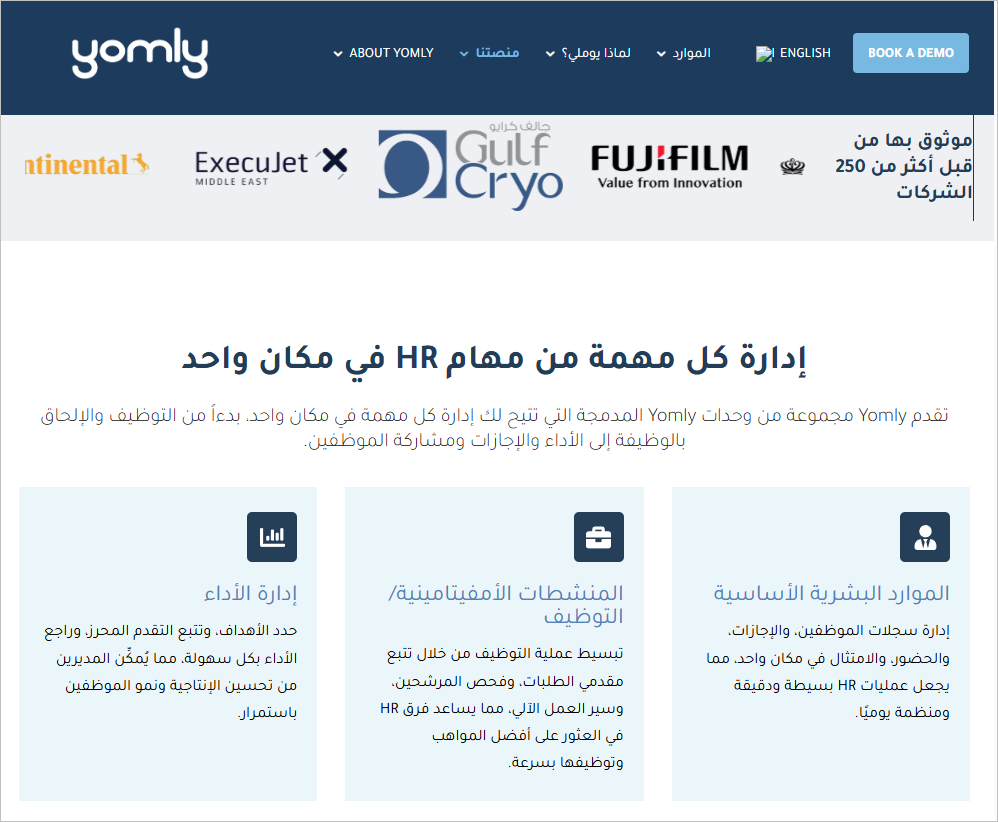
This affects more than paragraph alignment. Navigation, menus, buttons, forms, icons, tables, breadcrumbs, product interfaces, and other page elements may need to be adjusted so that the Arabic version feels natural.
For example, an English page may have its navigation arranged from left to right. On the Arabic version, the layout should support right to left reading while keeping interactive elements easy to understand.
5. Localize your Arabic title tags and meta descriptions
Do not simply translate the English title tag and meta description and use them on every Arabic page.
Your Arabic metadata should reflect the keywords and search intent used by your target audience. The direct translation of an English keyword may not be the phrase people actually search for.
For example, suppose your English page targets:
- HR software in Dubai
You should research the Arabic searches used by people looking for HR software in Dubai before deciding on the Arabic title. The wording should come from local keyword research rather than from an English to Arabic translation tool.
The same applies to your meta description. Use natural Arabic, mention the relevant service or location, and communicate what the user will find on the page.
You can automate the initial translation of metadata when working with a large website, but important pages should be reviewed manually. Automation can save time, while keyword research and human review make sure the final metadata matches actual search behavior.
6. Implement hreflang correctly
When you have English and Arabic versions of the same page, use hreflang to tell Google about the relationship between those versions.
For example, if you have: domain.com/services/seo/
And: domain.com/ar/services/seo/
you can use hreflang annotations to indicate which URL represents the English version and which represents the Arabic version.
If you also create country-specific versions, you can make the signals more specific. For example, an Arabic UAE page can use an appropriate regional language code such as ar-AE, while a Saudi Arabic version can use ar-SA.
The important point is that hreflang should reflect the actual language and regional targeting of each page. Do not add country codes simply because you want to rank in those countries.
7. Check hreflang implementation from both sides
Adding a single hreflang tag to the Arabic page is not enough. Your language and regional versions should reference each other correctly.
For example, the English page should identify the Arabic version, and the Arabic page should identify the English version. If you have several regional versions, each relevant version should be included in the hreflang relationship.
A simple example could look like:
- <link rel=”alternate” hreflang=”en” href=”https://domain.com/services/seo/” />
- <link rel=”alternate” hreflang=”ar” href=”https://domain.com/ar/services/seo/” />
For a UAE-specific Arabic version, you could use:
- <link rel=”alternate” hreflang=”ar-AE” href=”https://domain.com/ar-ae/services/seo/” />
The URLs should be accessible, indexable pages and should correspond to the actual language or regional version they represent.
A common mistake is creating hreflang tags that point to incorrect URLs, missing return references, or using language and country codes that do not match the page. These errors can make it harder for Google to understand which localized URL should appear for a particular searcher.
8. Research Arabic keywords separately from English keywords
Do not build your Arabic keyword list by translating your English keyword list one by one.
Start with the English keyword to understand the topic, then conduct Arabic keyword research for the specific country you want to target. Look at the actual terms people use, their search intent, variations in spelling, and differences between markets.
For example, an SEO agency targeting the UAE might have an English keyword such as:
digital marketing agency Dubai
The Arabic keyword strategy should be based on how people in the UAE actually search for that service, rather than whatever phrase an automatic translation produces.
This becomes even more important when expanding from the UAE into Saudi Arabia, Egypt, Qatar, or Morocco. Arabic is shared across these markets, but search vocabulary and preferred wording can vary.
Is Arabic SEO only about translating English content into Arabic?
No, translating an English website into Arabic is only the starting point of an Arabic SEO strategy. A translated page may communicate the same information, but that does not mean it uses the words Arabic users search for or addresses their search intent.
Arabic SEO requires you to understand how your target audience searches, which terms they use, how vocabulary differs between countries, and what information they expect to find. You also need to optimize Arabic page titles, meta descriptions, internal links, URLs, content, technical SEO, and the overall user experience.
How do you do keyword research for Arabic SEO?
Start with the topic and search intent you want to target, then conduct separate keyword research in Arabic for the specific market you want to reach. Do not assume that an English keyword can simply be translated and used as the primary Arabic keyword.
Arabic search behavior can vary significantly between countries. People may use different words, spellings, or expressions for the same product or service. This means the keyword research for a UAE campaign may not be the same as the research for Saudi Arabia, Egypt, Morocco, or another Arabic speaking market.
For example, if an SEO agency wants to target “digital marketing agency Dubai,” it should research the Arabic terms used by people in the UAE who are looking for that service. It should then examine the search intent behind those terms and use the relevant phrases naturally in the page content, title, meta description, headings, and other important areas.
You should also look at variations in spelling and local vocabulary instead of focusing on one translated phrase. The objective is to understand how your target audience searches, not simply convert your existing English keyword list into Arabic.
Should you use a .ae, .sa, or .eg domain for Arabic SEO?
You do not need a country code domain simply because your website is in Arabic. The choice between a country specific domain, subdomain, or subfolder should depend on how you plan to structure and target your website.
If you are building a website specifically for the UAE, a .ae domain can make sense because it is associated with the UAE. Similarly, a business building a dedicated website for Saudi Arabia or Egypt could consider the relevant country domain.
However, if you already have an English website and want to add an Arabic version that can serve users across several Arabic speaking markets, a subfolder such as domain.com/ar/ can be a practical approach.
For example:
- domain.com/services/seo/
- domain.com/ar/services/seo/
What is the best URL structure for an Arabic website?
If you already have an English website and are adding Arabic as another language, a subfolder structure such as domain.com/ar/ is a practical option.
For example, an English SEO service page could use: domain.com/services/seo/
Its Arabic version could use: domain.com/ar/services/seo/
This creates a clear relationship between the two language versions while keeping them under the same domain. It also gives you a consistent structure as the Arabic section grows.
A subfolder is not the only URL structure that can work. Google can understand language and regional versions using different site structures. The important thing is to use a structure that you can manage consistently and combine it with other international SEO signals, including correctly implemented hreflang.
Should you create separate Arabic landing pages for different Middle Eastern countries?
Create separate country-specific pages when there is a genuine difference in the audience, search intent, product offering, regulations, customer requirements, or other information that makes the page useful for that market.
For example, an HR SaaS company serving the GCC could create Arabic landing pages for the UAE, Saudi Arabia, and Qatar. Instead of changing only the country name on each page, the company could include relevant local terminology, regulations, integrations, customer examples, pricing information, and business requirements.
You could have pages such as:
- domain.com/ar/hr-software-uae/
- domain.com/ar/hr-software-saudi-arabia/
- domain.com/ar/hr-software-qatar/
Why should you avoid automatically redirecting Arabic users based on their IP address?
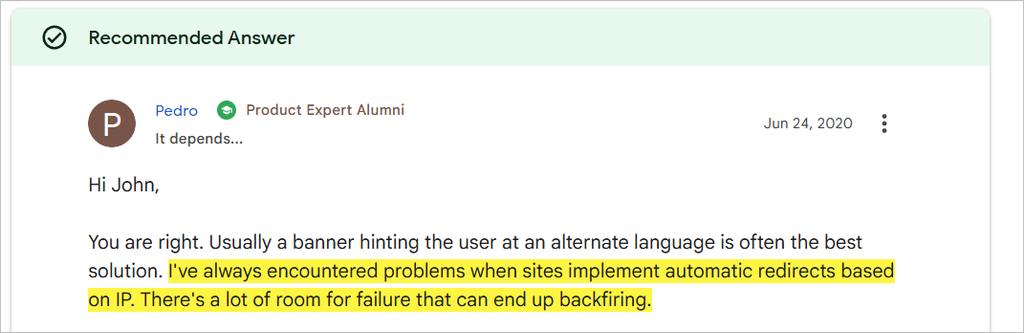
IP-based redirects can make it harder for both users and search engines to access the language or regional version they actually need. A visitor’s IP address does not always tell you which language or market they want to browse.
For example, someone from Saudi Arabia could be traveling in the UAE and still want to access the Saudi version of a website. Someone in the UAE could also be searching for information about a product or service available in Saudi Arabia. Users may also access websites through VPNs.
Here’s what Pedro Dias, who spent five years on Google’s Search Quality team, has to say about IP-based redirection:
How do you implement hreflang for Arabic and English pages?
Use hreflang to tell Google which language or regional version of a page is intended for a particular audience.
For example, if your English page is: domain.com/services/seo/
and the Arabic version is: domain.com/ar/services/seo/
you can use hreflang annotations to connect the two versions.
A basic setup could identify the English page with hreflang=”en” and the Arabic page with hreflang=”ar”. If you have country-specific Arabic pages, you can use regional language codes where appropriate, such as ar-AE for an Arabic page targeting the UAE or ar-SA for one targeting Saudi Arabia.
How should Arabic pages be designed for right-to-left reading?
Arabic pages should be designed as right to left experiences rather than simply replacing English text with Arabic text inside the existing layout.
This affects more than text alignment. Navigation, menus, buttons, forms, tables, breadcrumbs, icons, and other interface elements may need to be adjusted so they work naturally from right to left.
For example, an English website may have its navigation and interface elements arranged from left to right. When you create the Arabic version, the layout should support right-to-left reading so users can move through the page naturally.
If you are using WordPress, plugins such as TranslatePress can help you create and manage translated versions of your pages.
Looking for an arabic SEO agency in the UAE who can deliver organic growth?
ASAD helps businesses grow through Arabic SEO, localized content, technical SEO, and regional search strategies across the UAE and GCC.
With 10+ years of experience, 450+ projects delivered, 300+ brands worked with, and businesses served across 15+ countries, we understand how to build search visibility that supports real business growth.
Services we offer at ASAD, AI SEO Agency Dubai:
- GEO Services in Dubai
- Off Page SEO
- ChatGPT SEO Services in Dubai
- SaaS SEO Services in Dubai
- Reddit Marketing Services in Dubai
- Local SEO Services for Dubai local businesses
👉 Want to grow your visibility in Arabic search? Request a free AI visibility audit report →